What Are Some Pharmaceutical Options Used to Restore Brain Function.

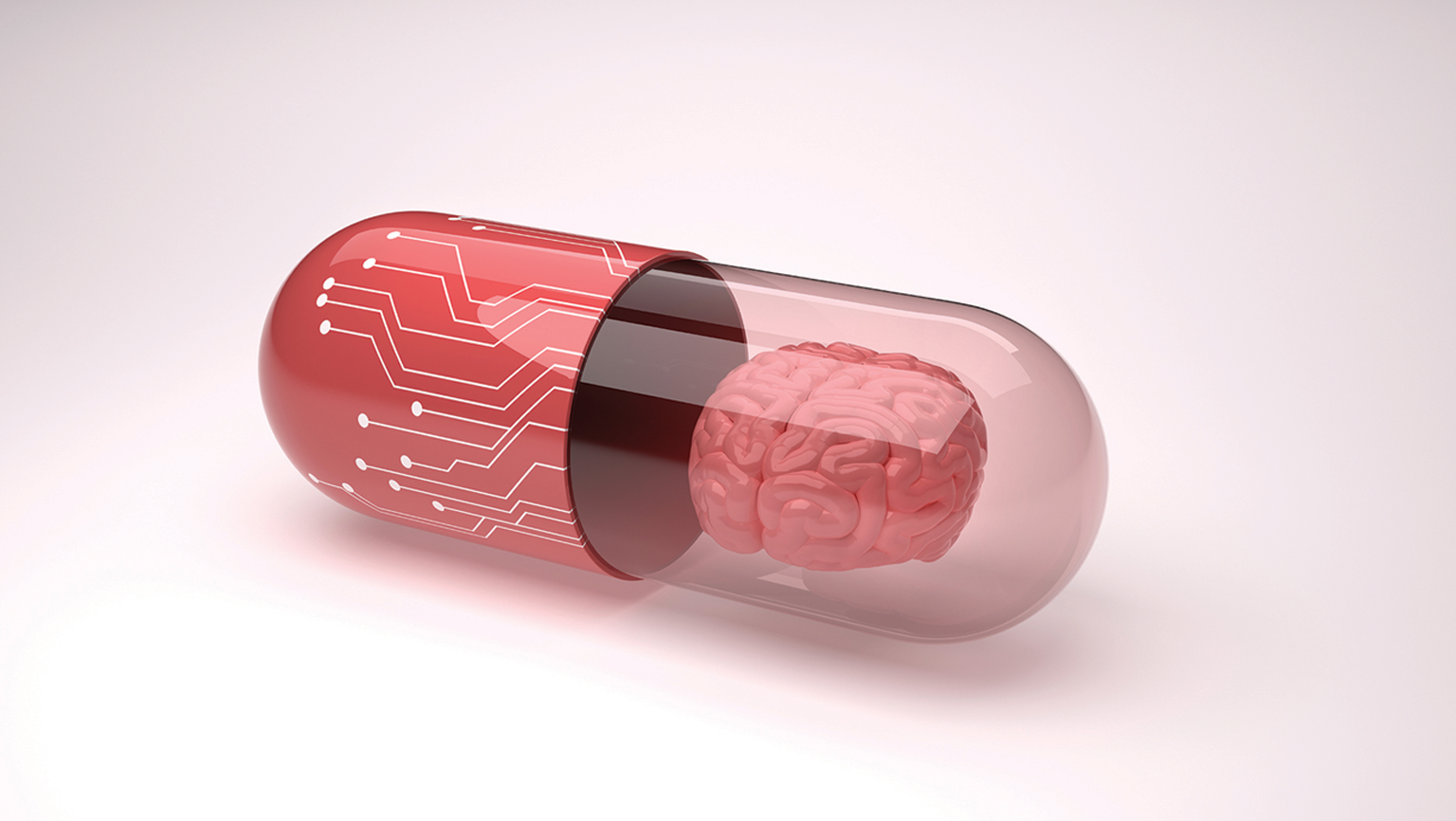
What if you lot could pop a pill that fabricated yous smarter? It sounds like a Hollywood motion-picture show plot, just a new systematic review suggests that the decades-long search for a safe and effective "smart drug" [see box below] might take notched its first success. Researchers have constitute that modafinil boosts college-club cognitive role without causing serious side effects. Modafinil, which has been prescribed in the U.Due south. since 1998 to treat slumber-related conditions such as narcolepsy and sleep apnea, heightens alertness much as caffeine does.
A number of studies have suggested that it could provide other cognitive benefits, but results were uneven. To clear up the confusion, researchers and then at the University of Oxford analyzed 24 studies published between 1990 and 2014 that specifically looked at how modafinil affects cognition. In their review, which was published in 2015 in European Neuropsychopharmacology, they establish that the methods used to evaluate modafinil strongly affected the outcomes. Research that looked at the drug's effects on the performance of elementary tasks—such every bit pressing a particular push button after seeing a sure color—did not detect many benefits.
Nevertheless studies that asked participants to do complex and difficult tasks after taking modafinil or a placebo plant that those who took the drug were more accurate, which suggests that information technology may affect "higher cognitive functions—mainly executive functions but too attention and learning," explains study co-author Ruairidh Battleday, now a medical doctor and Ph.D. student at the University of California, Berkeley.
But don't run to the pharmacy just yet. Although many doctors very likely prescribe the drug off-label to help people concentrate—indeed, a 2018 written report establish that 22 per centum of Americans had taken prescription brain-boosting drugs in the by yr and that four.1 percent had used modafinil—trials have non nevertheless been done on modafinil's long-term effectiveness or safety. Studies of the drug take been "carried out in a controlled scientific environment and unremarkably only looked at the effects of a single dose," explains neuropsychologist and review co-author Anna-Katharine Brem, and then at Oxford—so no one yet knows whether it is safe for long-term use in healthy people. Nor is it known whether modafinil might lose its edge with repeated employ, a phenomenon familiar to many coffee drinkers.
Side effects are another of import consideration. Modafinil has been shown to cause indisposition, headache and stomachache in select users, and some research suggests it could be addictive. Although these kinds of problems may be worth indelible for a drug that treats an illness, "if you don't have a medical condition, the risks versus benefits modify dramatically," says Sharon Morein-Zamir, a psychologist at the University of Cambridge, who studies ethical considerations associated with the use of knowledge-enhancing drugs. "For some the benefits will likely outweigh risks, at least some of the time," she says, whereas "for others this may not be the example." A pill you have to ace an test, for instance, won't practise you much good if information technology too causes a grueling stomachache.
Should Anybody Have Cognition-Enhancing Drugs?
As is the case with all medications, cognition-enhancing drugs impact different people in various ways. Setting bated the ethical questions most brain boosters, hither is a await at groups who may deserve special consideration.
CHILDREN AND TEENS: Cognition-enhancing drugs could present unique risks to the developing brain. Several clinical trials institute modafinil to be safe when given to children with attention-arrears/hyperactivity disorder (ADHD), simply the trials lasted just a few months, making information technology difficult to ascertain the potential furnishings of long-term use. In a 2014 review article examining the biochemical effects of modafinil and other common "smart drugs," researchers at the University of Delaware and Drexel Academy raised concerns that the utilize of these drugs could touch the developing brain's ability to suit to new situations and might increase the chance for addictive behaviors.
PEOPLE WITH LOWER IQs: Research suggests that knowledge-enhancing drugs offer the greatest performance boost among individuals with low-to-average intelligence. These findings led University of Oxford researchers to suggest in a 2014 paper that if such drugs were selectively given to people who need them near, many upstanding concerns about the drugs' use would exist alleviated, and they might even reduce opportunity inequality.
SENIORS: Some studies suggest that older adults may not derive much benefit from noesis-enhancing drugs. One report found that methylphenidate (Ritalin), which boosts working retentiveness and attention in young adults, had no effect on operation among healthy elderly volunteers who were asked to perform diverse cognitive tasks. —1000.Due west.M.
The Search for an Intelligence Drug
People have been searching for means to heave their brainpower mayhap for all of history. In the past century scientific efforts take revealed a few promising chemicals, but but modafinil has passed rigorous tests of cognitive enhancement.
CAFFEINE: Ane of the oldest and nearly pop stimulants. People recognized caffeine's stimulant properties hundreds (possibly thousands) of years ago. Information technology can enhance alertness and attention; however, furnishings are short-lived, and tolerance builds up quickly.
NICOTINE: Also a stimulant, used for hundreds of years for a range of medicinal purposes. It is very addictive and has many dangerous side furnishings.
AMPHETAMINE (BENZEDRINE, ADDERALL): Start synthesized in 1887. Benzedrine was the first drug to care for hyperactivity in children. Amphetamine tin enhance attention and retentiveness by increasing levels of norepinephrine and dopamine in the brain, simply the compound tin can exist addictive and comes with a range of side effects, including hyperactivity, loss of ambition, disturbed slumber, fifty-fifty psychosis.
METHYLPHENIDATE (RITALIN): Commencement marketed in 1954 and prescribed in the 1960s for treating hyperactivity. It became pop for ADHD in the 1990s. As with amphetamine, it tin improve memory and focus for those with ADHD, but it is likewise used off-label as a study and work aid. Some individuals build upwards a tolerance to Ritalin over time.
ACETYLCHOLINESTERASE INHIBITOR (ARICEPT): Approved to treat Alzheimer's affliction in the 1990s. Information technology has been shown in some studies to heighten retention and attending in healthy individuals.
MODAFINIL: Originally used to treat narcolepsy. Information technology tin besides heighten cognitive function, particularly when completing difficult tasks. Experts are not quite sure how it works or what long-term furnishings would look like.
This article was originally published with the title "A Safe Drug to Boost Brainpower" in SA Mind 27, ii, sixteen-17 (March 2016)
doi:10.1038/scientificamericanmind0316-16
MORE TO EXPLORE
Modafinil for Cognitive Neuroenhancement in Healthy Non-Sleep-Deprived Subjects: A Systematic Review. R. McLennan Battleday and A.-G. Brem in European Neuropsychopharmacology, Vol. 25, No. eleven, pages 1865-1881; Nov 2015.
How Realistic Are the Scientific Assumptions of the Neuroenhancement Debate? Assessing the Pharmacological Optimism and Neuroenhancement Prevalence Hypotheses. Southward. Schleim and B. B. Quednow in Frontiers in Pharmacology, Vol. 9, No. iii. Published online January 22, 2018.
Use of "Smart Drugs" on the Ascension. Arran Frood in Nature News. Published online July 5, 2018.

mcdonaldolcou1978.blogspot.com
Source: https://www.scientificamerican.com/article/a-safe-drug-to-boost-brainpower/
0 Response to "What Are Some Pharmaceutical Options Used to Restore Brain Function."
Post a Comment